The start of the semester is often filled with new classes, fresh goals, packed schedules and plenty of pressure. It is exciting, but it can quickly become overwhelming.
As the novelty of back-to-school excitement begins to fade, the reality of educational, professional, and personal responsibilities comes into sharp focus. You may notice as the semester rolls on, stress begins piling up.
If you are a busy campus member, you may be tempted to ignore the stress and keep moving, even choosing to add on to the stress, until you reach a breaking point. Many people who reach their breaking point are at a high risk for burnout. Before burning out, I challenge you to think about your stress and how you can reduce it.
Mindfulness is a great way to give yourself the mental health break you need.
Think of mindfulness as the opportunity to give your brain a breather. A mini vacay for your mental health. Mindfulness is simply paying attention to your thoughts, your feelings, and your surroundings without judgment or overthinking. It does not require a great deal of time, effort, or investment.
If you find time to include a few mindful minutes in your day, you can make a big difference in your mental health. Mindfulness can be a part of your already established routine. You can practice while waiting for the bus, walking across campus, brewing your coffee, or even during your nightly skincare routine.
Below are a couple of ways to include mindfulness in your everyday life:
Mindful Breathing: Find a comfortable spot where you can close your eyes and feel safe. Now, notice your breath. Count during each inhale and exhale. Try to make them longer. Focus on the feeling of the air moving in and out of your body. Start with a minute and increase the time (if you can).
Gratitude Journaling: Encouraging your brain to see the positivity in your life encourages and perpetuates gratitude and positive thinking. Write down a couple things a day that you are grateful for. This activity rewires your brain to look for good, shaping your thoughts to be more positive.
Body Scan: The body scan is something that you can practice while lying in bed, in the morning, or in the evening. Bring your attention to each part of your body, beginning with your toes. Flex and relax the muscles of your body, notice these sensations, and encourage relaxation in each body part.
Once you have gone through the muscles of your body, think of your body as a whole. Notice how you are feeling. Take some deep, mindful breaths before concluding the activity.
Mindfulness isn’t about being perfect. It’s about giving yourself time to breathe, reset, and become grounded. Expect your mind to wander off track; remember to gently return to your mindfulness activity. Do not judge yourself. Remember, this is practice. While the saying is usually “practice makes perfect”, in this case, practice makes practice; there is no perfect. It is something that you can do every day that will help you reduce stress while you build mental wellness and resilience.
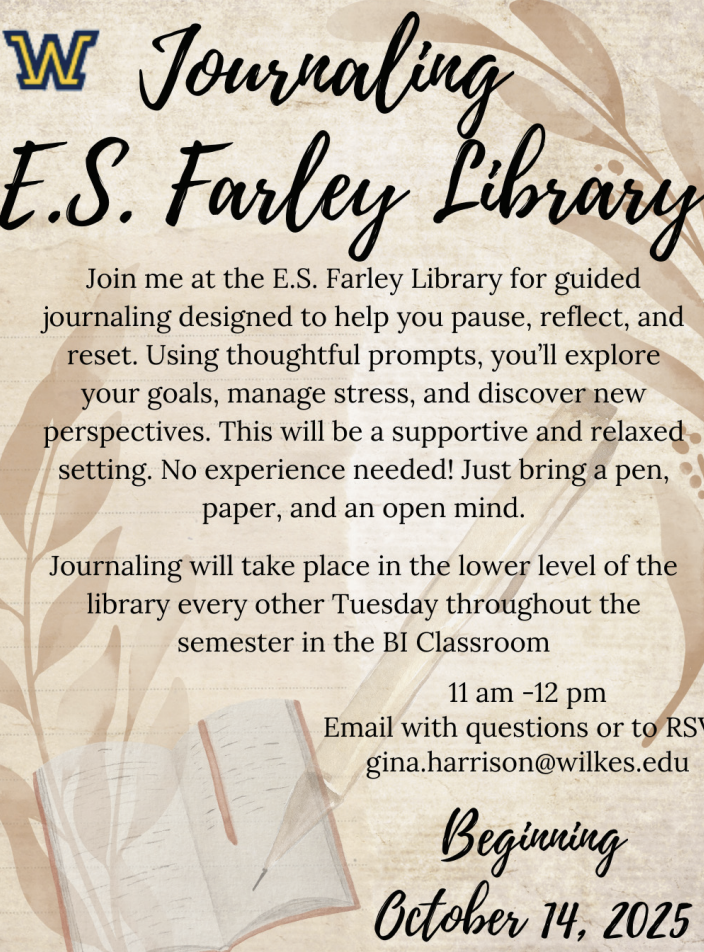
If you would like to learn more about mindfulness through journaling, join me at the E.S. Farley Library for guided journaling sessions designed to help you pause, reflect, and reset. Using thoughtful prompts, you can explore your goals, manage stress, and discover new perspectives.
Journaling will be held in a supportive and relaxed setting. No experience needed. Just bring a pen, paper and an open mind.
Journaling sessions begin Oct. 14. The journaling group will take place at the lower level of the E.S. Farley Library every other Tuesday throughout the semester from 11 a.m. until noon in the BI Classroom.
If you have any questions or wish to sign up for journaling, please email me at [email protected].