On Thursday, April 16, the first floor of the Henry Student Center transformed into something far more powerful than a typical campus event. From 11 a.m. to 1 p.m., students, faculty and staff at Wilkes University were invited to step into an interactive experience titled “Walk a Mile in My Shoes,” an event designed to simulate the realities of life as a refugee.
Organized as part of an international relations course, the exhibit guided participants through eight immersive stations, each representing a different aspect of the refugee experience, from identity and shelter to education and long-term uncertainty. The goal was simple but impactful: to encourage attendees to move beyond statistics and truly understand the human side of global displacement.
Penelope Ziegler, a senior political science major, helped bring the event to life, along with other students.
“We’re doing this event, ‘Walk a Mile in My Shoes,’ for my international relations class,” she explained. “Our event has eight stations, which are supposed to mimic a refugee camp and show what refugees go through when they have to flee their country and go to a new country,”
The experience began with an identity station, where participants received a card detailing a fictional refugee’s background, including their name, country of origin and personal story. Each card also featured a QR code linking to additional information, allowing participants to follow one individual’s journey throughout the exhibit. As Ziegler described, the goal was to help students “live in this person’s shoes” and reflect on their story as they moved through each stage.
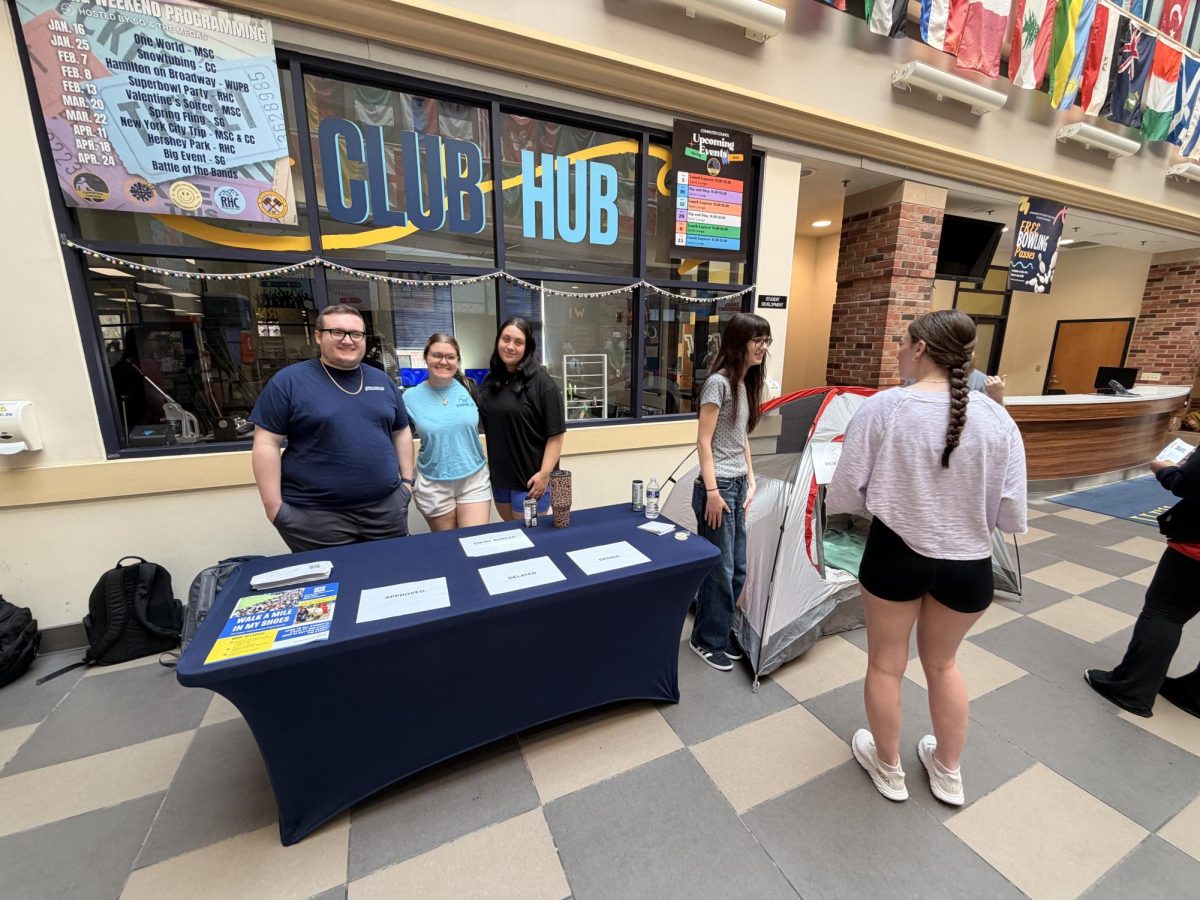
From there, participants entered the shelter station, where the harsh realities of refugee housing became immediately apparent. A small tent, representing the typical living space in a refugee camp, forced visitors to confront the lack of privacy and comfort many families endure.
Students leading the station explained that entire families, often four to six people, must share cramped quarters on plots of land as small as six-by-six feet. These makeshift homes must withstand all weather conditions, from rain and snow to extreme heat, while holding all of a family’s belongings. The station emphasized how long-term this situation can be, with some refugees living in camps for years or even decades.
The next station shifted focus to food insecurity. Participants were asked to consider the variety and abundance in their own diets before learning how limited meals are in refugee camps. While the average American consumes between 2,200 and 2,500 calories per day, refugees often receive roughly 1,000 fewer calories.
Their meals typically consist of repetitive portions of rice, beans, sparse vegetables and small amounts of bread. Meat and desserts are rare, if available at all. This lack of variety and nutrition can persist for months or years, depending on how long individuals remain in camps.
Water scarcity was the focus of the fourth station, presented by sophomore Abby Cruz. She highlighted the stark contrast between water usage in the United States and in refugee camps.
“This is the water station,” Cruz said. “Over here [is] the average amount of water that people in the United States use in two minutes… about five gallons. And over here… this is what refugees use, it’s only a gallon.”
This visual comparison underscored how limited access to clean water affects daily life, hygiene, and overall health.
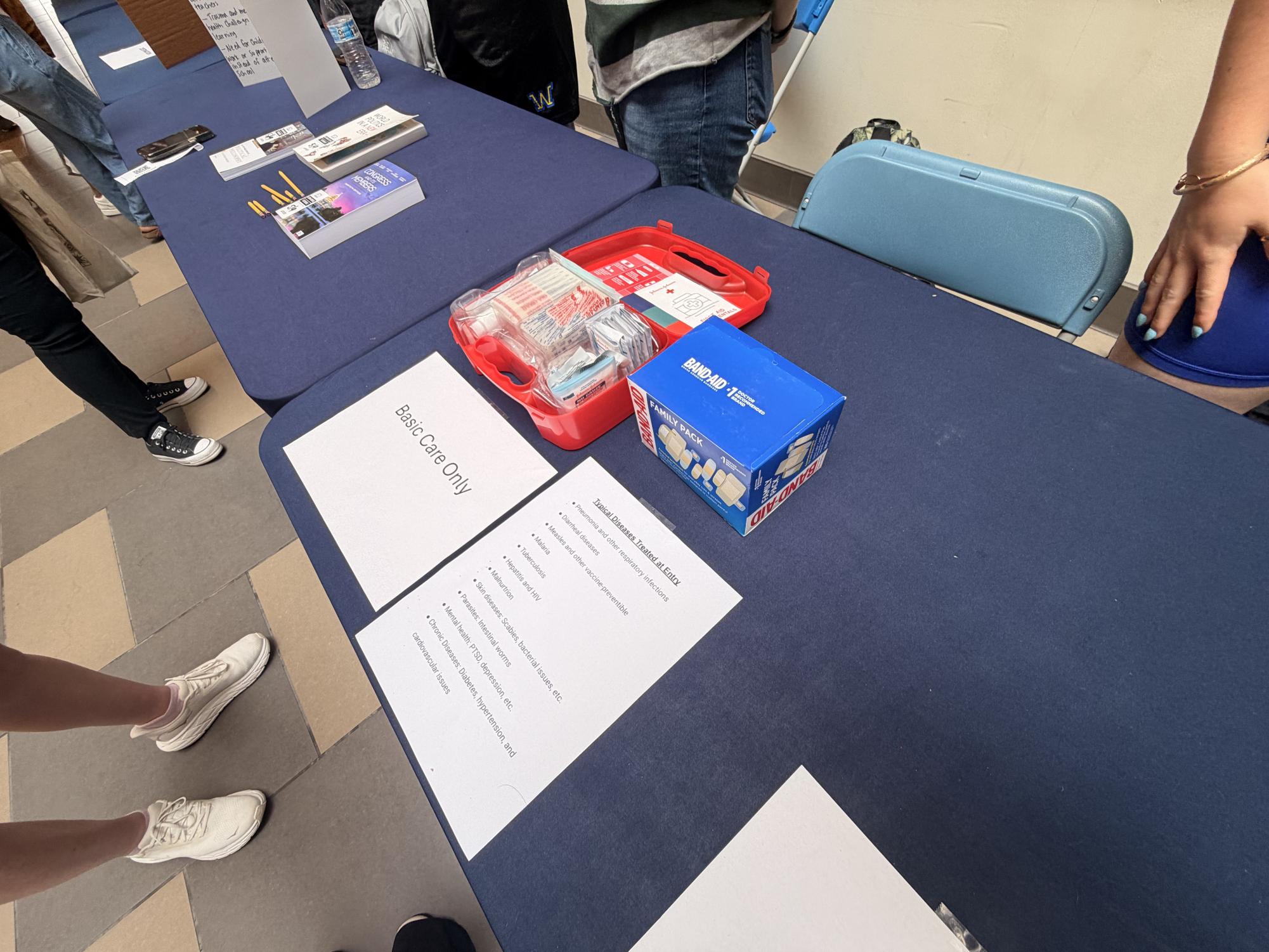
Health challenges were explored in the fifth station, where students discussed the role of non-governmental organizations (NGOs) in providing care within refugee camps. These organizations often treat diseases such as tuberculosis and HIV, while also addressing widespread malnutrition.
However, limited resources and lack of research make these efforts difficult. Beyond physical illness, the station also emphasized the mental health toll of displacement, particularly given the violence many refugees experience during their journeys.
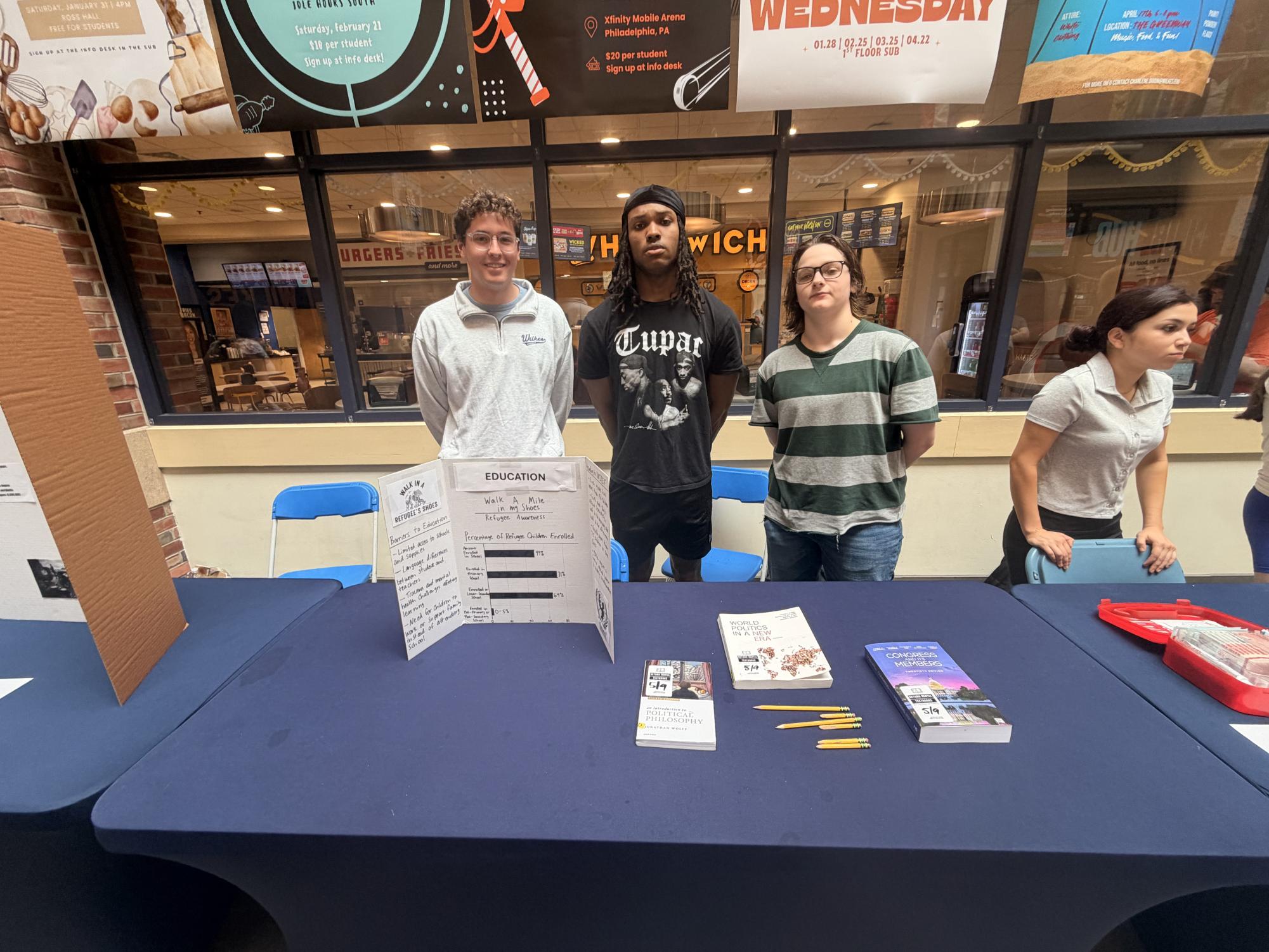
At the education station, sophomore civil engineering major Alton Smargiassi shed light on another critical issue: access to learning.
“Less than 50% of children in these refugee camps actually have access to sufficient education,” he said.
Even when education is available, it often comes with significant barriers. Some families must pay fees for their children to attend school, while overcrowded classrooms, sometimes with as many as 150 students, make effective learning nearly impossible. Resources are scarce, with some classrooms lacking basic supplies like textbooks and pencils. The result is a deeply unequal system where many children are denied the opportunity to build a better future.
The destination station brought participants face-to-face with the difficult decisions refugees must make after arriving at a camp. Options are limited and often fraught with uncertainty: remain in the camp, attempt to return home, or seek resettlement in another country. Most refugees, roughly 20 to 25 percent, end up staying in camps long-term, where they may spend an average of 17 years.
Returning home is rare, with only 1 to 3 percent able to do so, often to countries still facing instability such as Afghanistan or Syria. Resettlement in a new country is even less common, with fewer than 1 percent of refugees successfully immigrating. Even then, they frequently encounter racism, stigma and the challenge of adapting to an entirely new culture.
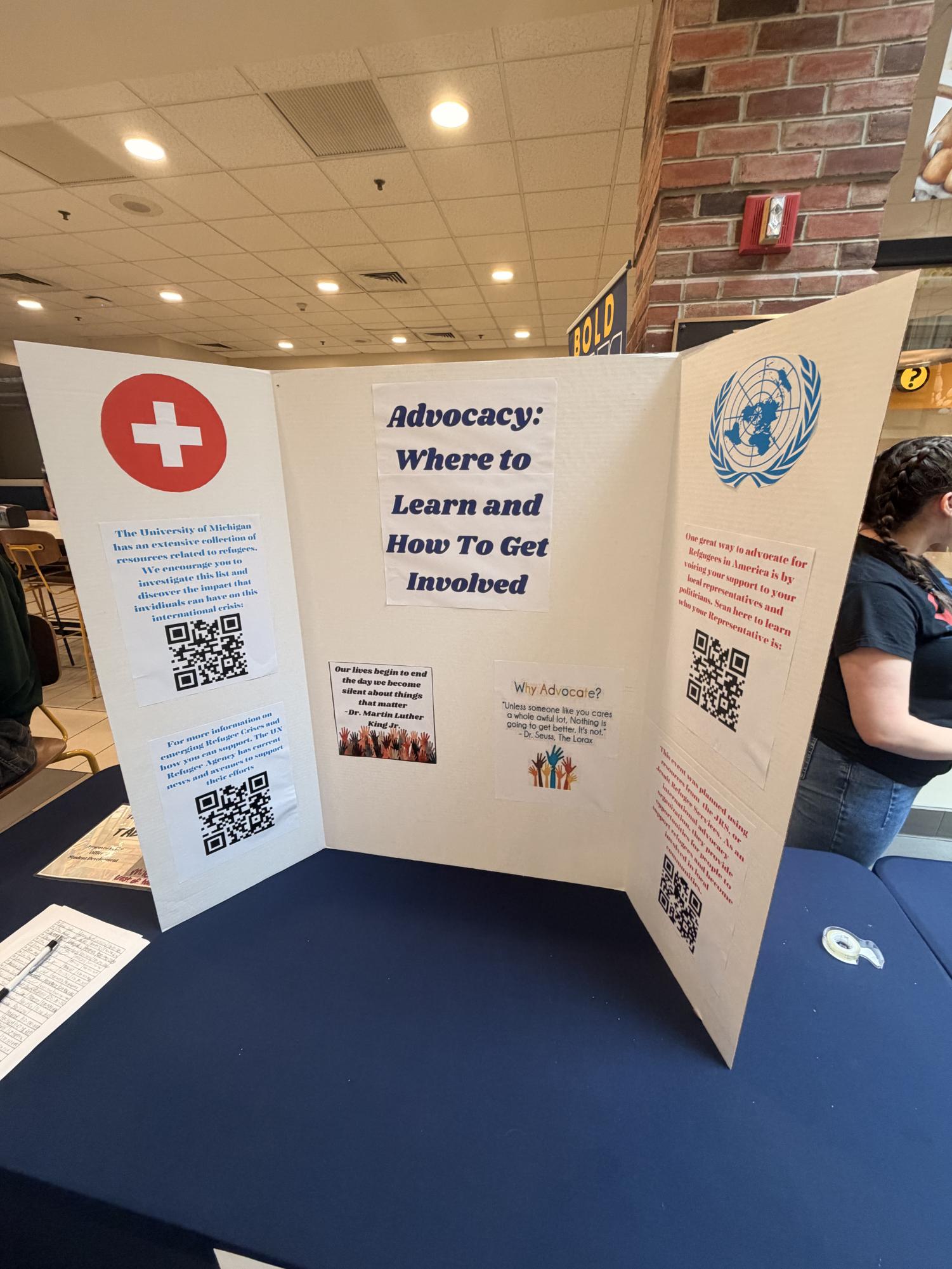
The final station focused on advocacy, encouraging participants to take what they had learned and turn it into action. Resources were provided to help students further educate themselves about refugee crises around the world and find ways to support affected communities locally and globally.
Throughout the exhibit, the interactive format allowed participants to engage with each issue on a deeper level. Rather than simply reading about refugee experiences, attendees were asked to imagine themselves living through these conditions, making difficult decisions, navigating limited resources and facing an uncertain future.
By the end of the walkthrough, it became clear that “Walk a Mile in My Shoes” was more than just an academic project. It was a powerful reminder of the human impact behind global displacement, and a call to action for those who experienced it.
Through thoughtful design and student-led storytelling, the event succeeded in turning complex global issues into something tangible, personal and impossible to ignore.