
Spring break is a long-standing school tradition, particularly for colleges and universities. Taking advantage of spring break is more than just cutting loose and partying. It is a break in the often stressful and strenuous work that students (and faculty) are putting in.
The break often coincides with warmer temperatures that can give us all the itch to get outside and enjoy the weather now that the deep, dark and heavy winter days are behind us.
I hope that you are returned and refreshed from your spring break. If you spent your time working or studying, you missed an important opportunity for you to work on your mental health. Spring break is meant to provide a reboot. Interestingly, breaks are actually very good for your mental and physical health.
Breaks allow you the opportunity to restore and maintain balance for your mental and physical health. They help you to make sure that you are getting adequate sleep and exercise, which improves your cognition (ability to think). Stress impairs your ability to think which can have negative consequences.
When should you take a break?
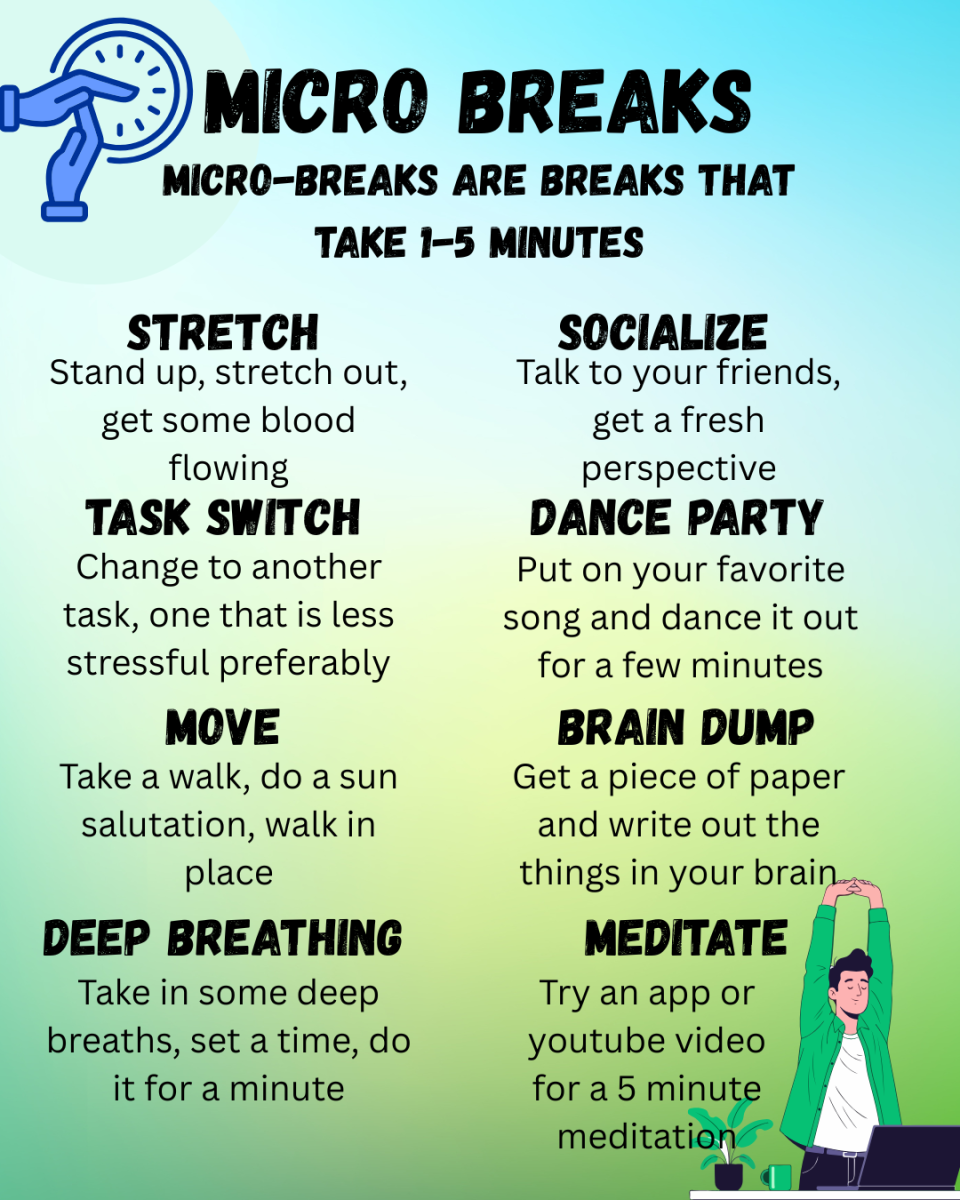
After engaging in sustained activity, 30-45 minutes is the time to take a break. Continuing your work without a break may result in decreased attention and decreasing productivity. There are many ways to take a break that don’t necessarily require a lot of effort or funding.
Some small ways to take a break include taking a walk, going outside, touching grass or grabbing a 20-minute nap. Micro breaks are between 1 and 5 minutes. During a micro break you can move your body, stretch, meditate, socialize or take some time for yourself. Interleaving is another way to break. This is the process of switching tasks, to give yourself a break from one task with another.
Breaks are personal. If you don’t like socializing, don’t spend a break doing that. Do what feels good and refreshing for you. Make sure that when you are working hard or getting in a major study session, you set an alarm for taking breaks.
What happens if you don’t take a break?
While not taking a break won’t necessarily harm you, it certainly won’t help you either. Constant stress and anxiety may lead you to the dreaded burnout. Burnout is considered a syndrome, not a diagnosis, that is caused by chronic, unmanaged stress.
Burnout differs from general stress and can also cause physical symptoms. These symptoms may include headache, stomachache, sleep issues (too much or too little) and even weight changes. Burnout is characterized by three main components: exhaustion, cynicism and decreased efficacy.
Exhaustion can be physical, mental or both; it is feeling drained of energy, lacking motivation and sometimes withdrawal from things you enjoy. Decreased efficacy is a general decline in your work, productivity and sometimes a sense of hopelessness.
And lastly, cynicism. Cynicism is often seen in a negative attitude, alienation from family and friends, irritability and insensitivity toward your work, friends, and loved ones.
Bottom Line
School is hard. Work is hard. Sometimes, life is hard. Don’t slide into burnout by not taking care of yourself. Healing from burnout is possible, but taking breaks will help you avoid it altogether. Be kind to yourself and schedule some breaks.