
January 1 has come and gone. We’re now deep into the winter months, far removed from the excitement of the New Year and the optimism it often brings.
New Year’s resolutions are a long-standing cultural tradition. They are a symbolic fresh start meant to help us become our best selves. These resolutions often focus on change, with common goals including improving fitness, losing weight, studying more effectively, getting organized or saving money.
Yet as the weeks pass, the motivation behind these resolutions tends to fade. Many people struggle to maintain momentum, and some can’t even recall their original resolutions by the end of the year. Despite how common the practice is, there is surprisingly limited scientific evidence supporting the effectiveness of traditional New Year’s resolutions.
One reason resolutions fall short is that they are frequently vague or focused only on the outcome. Statements like “I will get an A in sociology” or “I will lose weight” sound motivating, but they don’t provide a clear plan of action.
Without structure, even the most well-intentioned goals can feel overwhelming or unattainable. Inadequate goal setting doesn’t just lead to abandoned resolutions, it can also create unnecessary stress, frustration, and pressure. When goals feel too big or unrealistic, giving up can seem easier than pushing forward.
There is a well-established framework for setting effective goals, known as Goal Setting Theory, developed by psychologists Edwin Locke and Gary Latham in the 1990s. According to their research, effective goals should be:
- Specific
- Challenging but attainable
- Aligned with persistence and effort
- Supported by existing or learnable strategies
The theory also emphasizes the importance of distinguishing between performance goals (focused on outcomes) and learning goals (focused on skill development and growth).
For example:
- Instead of “I will get an A in sociology,” try “I will dedicate two hours each week to studying sociology.”
- Instead of “I will lose weight,” consider “I will increase my physical activity to 20 minutes, four times per week.”
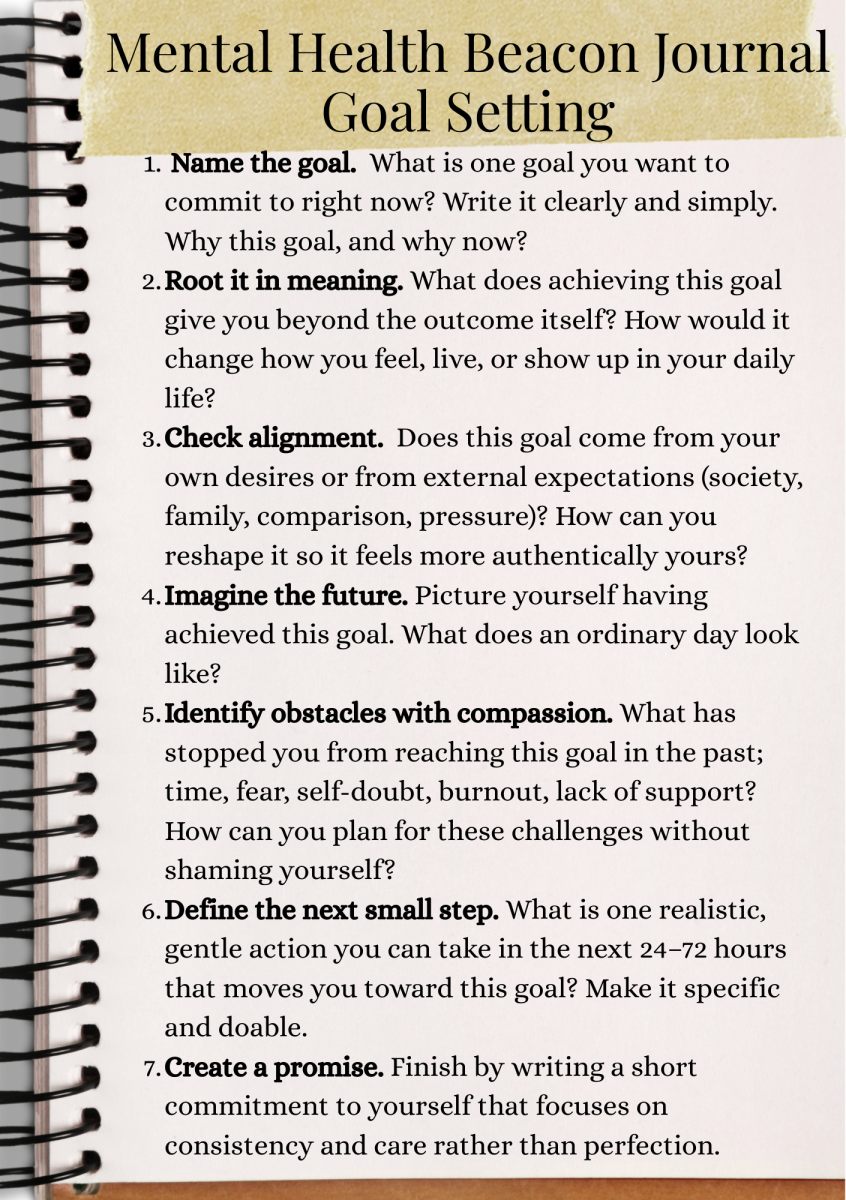
Research suggests that goals are most effective when they are meaningful, manageable, and focused on the process, not just the result. As the saying goes, it’s about the journey, not the destination.
Today, there is no shortage of goal-setting tools. Acronyms like SMART goals have been around for decades, while newer digital tools, from fitness trackers and health apps to gamified platforms (feed the raccoon) offer fresh ways to stay engaged. While these tools can be helpful, they are only effective if paired with intentional, realistic goal setting.
Everyone has an opinion on how to set goals, but one factor consistently matters most: belief in yourself. Confidence and self-trust play a critical role in follow-through. Being your own biggest supporter can make the difference between giving up and continuing forward.
If you’ve forgotten your resolutions or lost some of that New Year’s excitement, don’t worry. You haven’t failed, you’re simply human. Revisit your goals, refine them and focus on small, actionable steps. Most importantly, remember this: you don’t need a new year, a Monday or a new semester to make meaningful changes. Growth can begin at any time.